Native American elders face significant barriers that make it difficult to age with dignity. The Minnesota Indian Area Agency on Aging (MIAAA) is working to address inequities and ensure that tribal elders have access to the support they need.
Disparities impact length and quality of life
Native communities have traditionally revered elders, seeing them as pillars in their communities and keepers of the tribe’s traditions and languages. Yet, tribal elders have a high rate of poverty, poor health outcomes and the lowest life expectancy of any racial group, about 8 years less than white people.
Disparities stem from historic oppression of indigenous communities and long-standing systemic barriers that limit access to healthcare, housing, transportation, food and social services.
According to the Minnesota State Demographer, Minnesota had 5,262 Native American adults aged 65 years and older (2024). Within tribal nations, there is diversity in language, culture and practices.
Redesigned agency
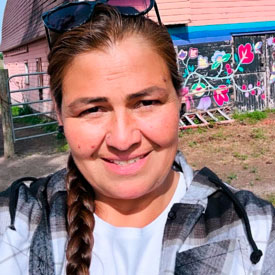
Years of planning between the Minnesota Board on Aging, the federally designated administrator of Older Americans Act funding, and tribal leaders led to rethinking how the Older Americans Act should serve Minnesota’s Native elders. A reorganized Minnesota Indian Area Agency on Aging (MIAAA), now administered by Red Lake Nation under its Ombimindwaa Gidinawemaaganinaadog (Uplifting Our Relatives) program, started operations in January 2025. Michelle Reynolds is its executive director.
The agency serves 8 of the 11 Minnesota tribes (Prairie Island Indian Community does not receive services but is represented on the Advisory Council):
- Bois Forte Band of Chippewa
- Fond du Lac Band of Lake Superior Chippewa
- Grand Portage Band of Lake Superior Chippewa
- Leech Lake Band of Ojibwe
- Lower Sioux Indian Community
- Red Lake Nation
- Upper Sioux Community
- White Earth Nation
“It is important that these services are administered by one of the tribes,” said Reynolds. “It allows us to provide services in a way that is in keeping with our beliefs and practices and it builds trust. We know we all share one goal: that our relatives are cared for.”
Reynolds explained that the tribal nations see everyone in their communities as relatives. “We don’t call someone we serve a ‘client.’ We call them our ‘relative.’ We believe that everything we have is to be shared among us all. So, if an organization doesn’t spend all the money allocated to them, they freely give it back so other elder relatives can benefit from it.”
Reynolds noted that rather than asking organizations to submit a proposal for funding, MIAAA asks for a Letter of Intent and a work plan. She said that any tribal nation that requests funding receives funding, in keeping with their tribal values. An Advisory Council made up of representatives from the tribes allocates the funding. Because the tribes are sovereign nations, communications between them is government to government. “That means our interactions require a high level of respect. It is not a hierarchy. It is peer to peer,” said Reynolds.
Reynolds spends a good amount of her time coaching members of the tribes on the technical aspects of administering and accounting for the federal dollars. “They need to be sure to dot the ‘i’s and cross the ‘t’s.’ It’s important that it is done right. We are all learning together.”
Supporting elder relatives
MIAAA provides a range of services that allow older adults to continue to live in their homes and in their communities. Services are tailored to the particular needs of individuals in each tribe and might include services such as home delivered meals, caregiver support, help with indoor and outdoor chores and transportation. MIAAA passes funding onto community-based organizations which provide the services to tribal elders.
“Tribal control of the area agency is making a difference. At first tribes were hesitant to submit funding requests,” said Reynolds. “As trust has grown, they are becoming more comfortable and more creative. It is making a positive difference in the lives of our elder relatives.”
Sources:
“Native American Life Expectancy Increases but Still Lowest Among U.S. Populations” by Elyse Wild, March 9, 2026. Native News Online.
“Minnesota Indian Area Agency on Aging reorganizing to better serve Native American elders,” April 4, 2024. Red Lake Nation News.
“Justice for Tribal Elders: Issues Impacting American Indian and Alaska Native Older Adults” by Sahar Takshi, December 20, 2023. Justice in Aging.